
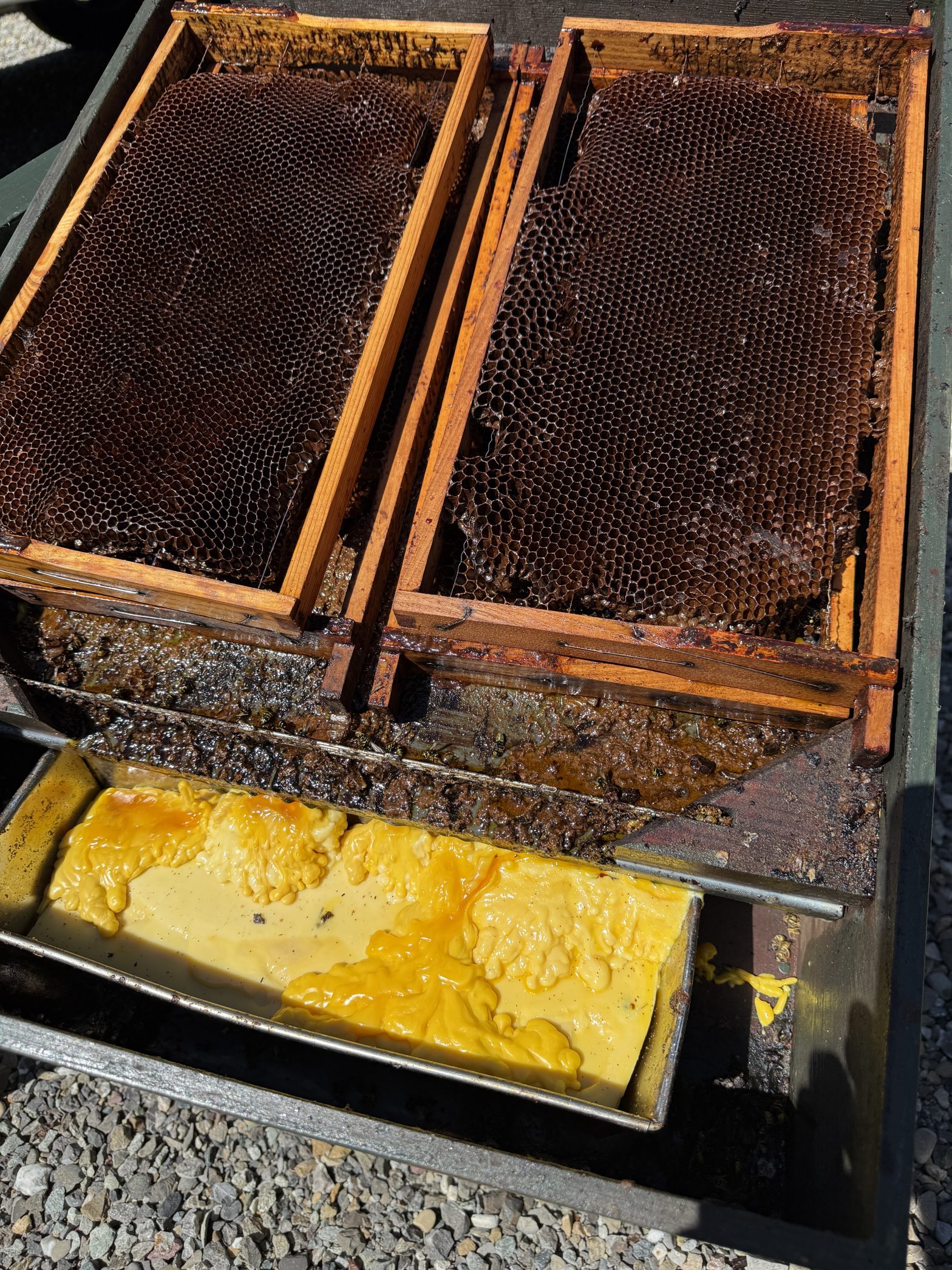
Over time, the honeycombs become darker and darker as more bees hatch within them. At the end of summer, these dark combs are removed from the hive and replaced with fresh ones. New yellow beeswax can be melted from these old combs using a solar wax melter.
Category: bees
Varoa treatment
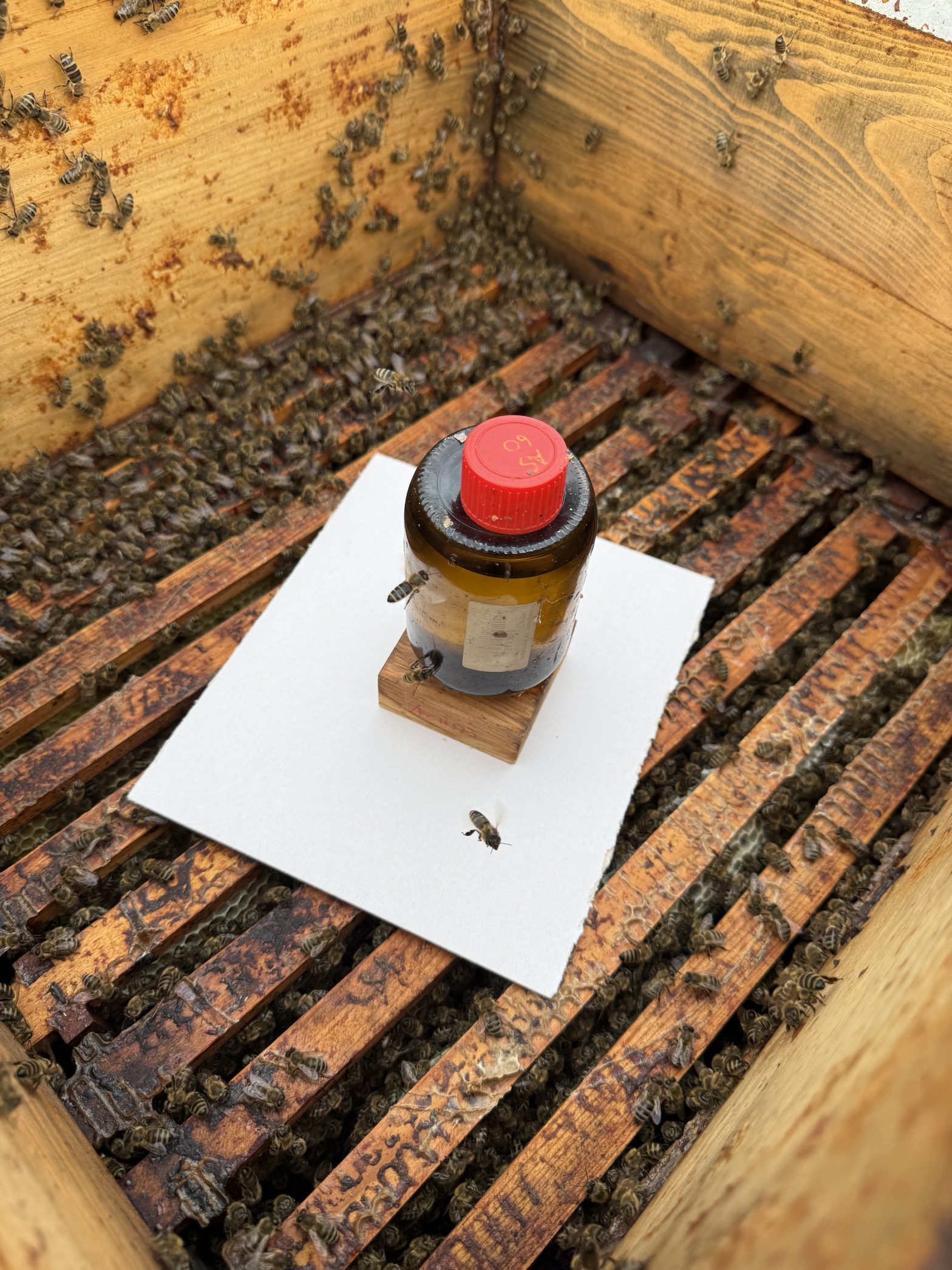
Our bee colonies must be treated for the Varroa mite every year so that the bees remain aliveand productive. In the summer after the honey harvest, the colony is treated with 60% formic acid. To do this, at temperatures between 20° and 30° and when humidity is not too high, a small bottle of formic… Continue reading Varoa treatment
Bee feeding
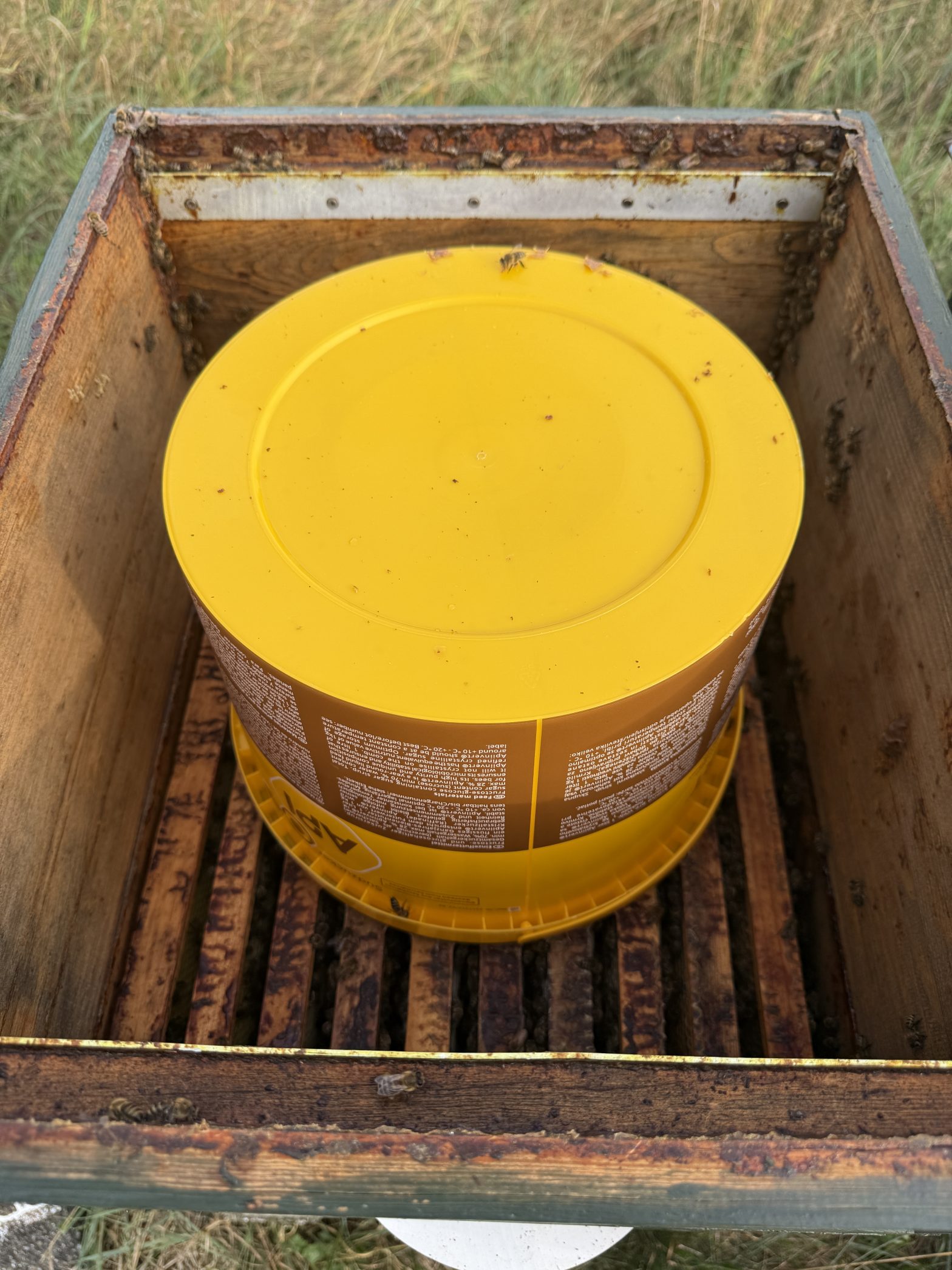
After the honey has been removed from the hive and has been extracted, each bee colony receives a bucket containing 14 kg of sugar solution. The bucket has small holes in the lid, and within a few days, the bees have generally emptied the bucket with their tiny tongues and stored everything inside their hive.
cells for drones and queens
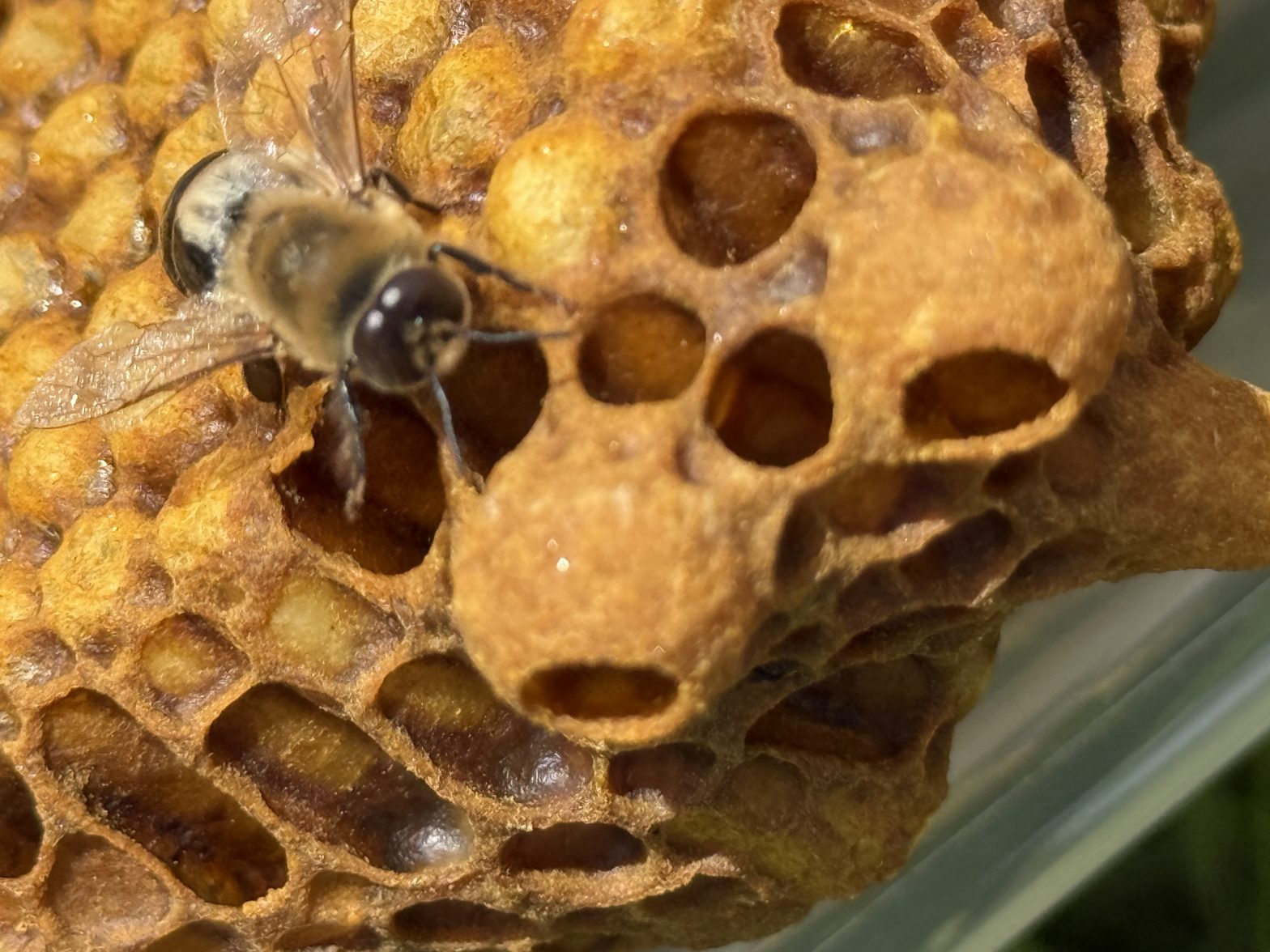
Brood cells for drones are larger than those for female worker bees. The only brood cell larger than these is that of a queen. Those queen cells in the picture front have been started, but are not yet populated by an egg.
summer configuration
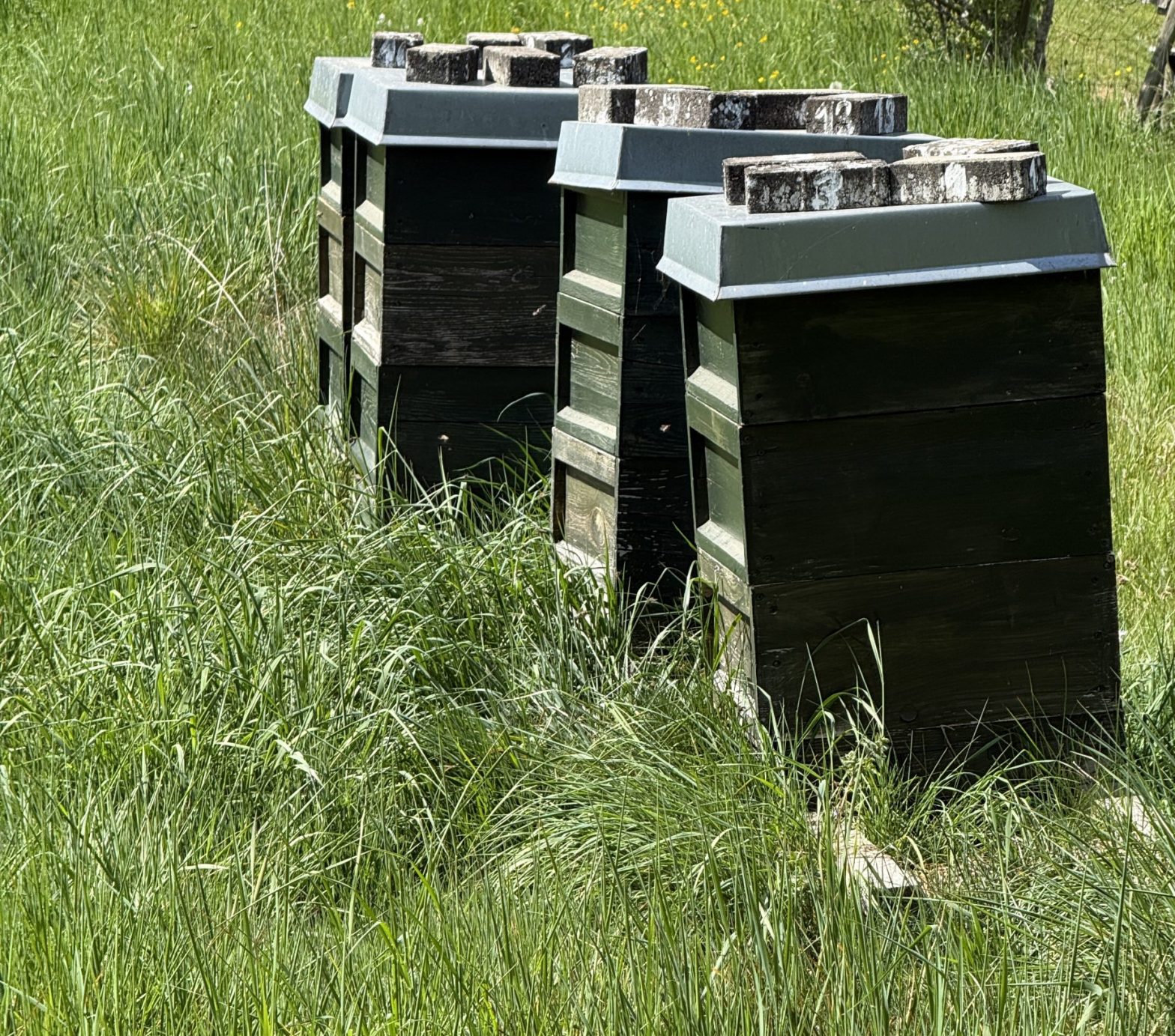
Beehives in their summer configuration: The top section contains the honeycombs for storing honey. The bee colony lives in the sections below, where they raise their brood.
beeswax recycling
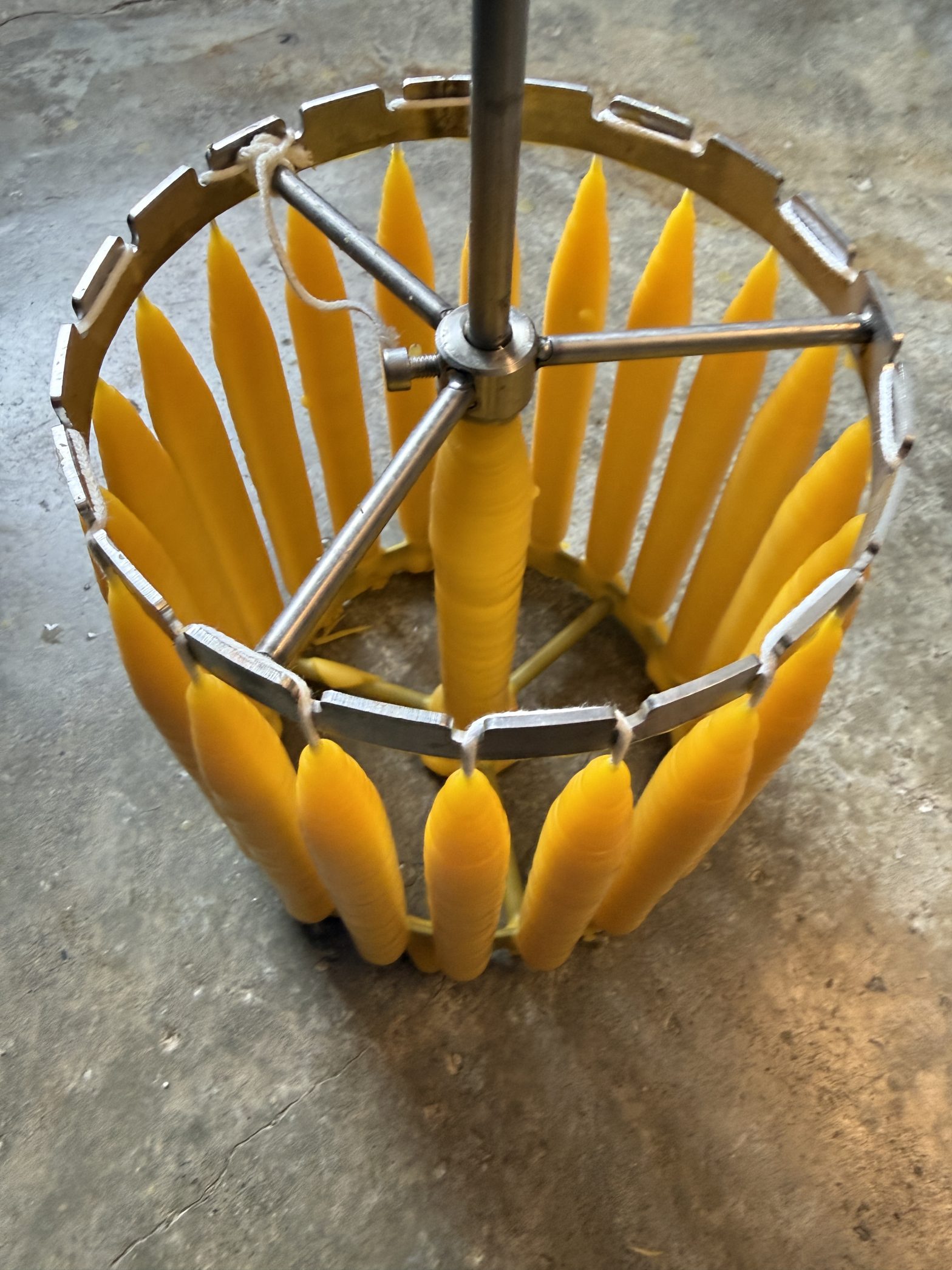
Candles can be made from the melted beeswax from honeycombs. The wax in the candles is yellow from the pollen that the bees collect from flowers.
removing the cell lid
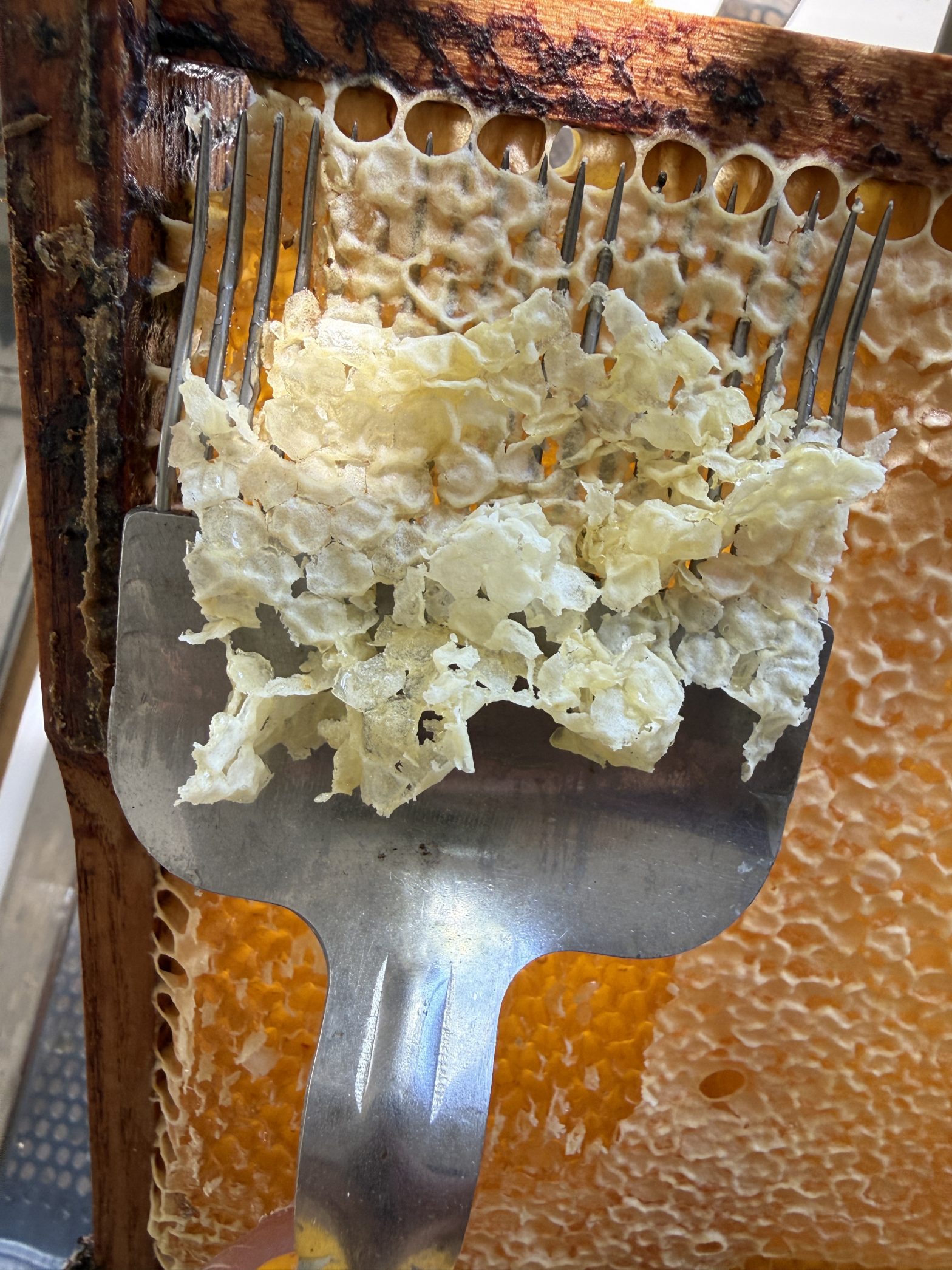
Before the honey can be extracted, every single honeycomb cell must be opened by removing each cell lid. The wax of the cell lid is white as it is still clean and not polluted by the yellow pollen the bees are collecting.
extraction process
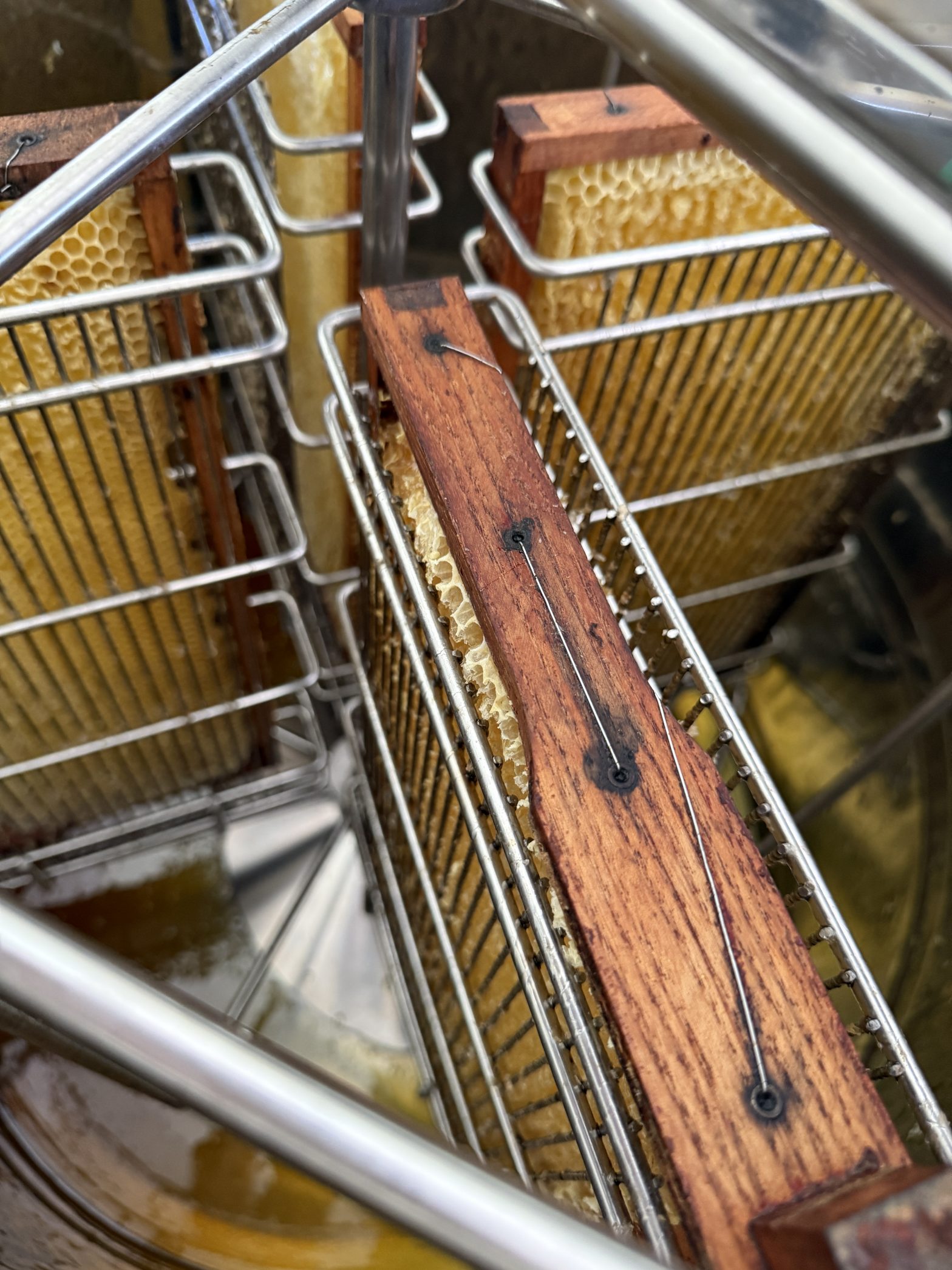
The honeycombs are spun in a centrifuge until the liquid honey is extracted.
female field workforce
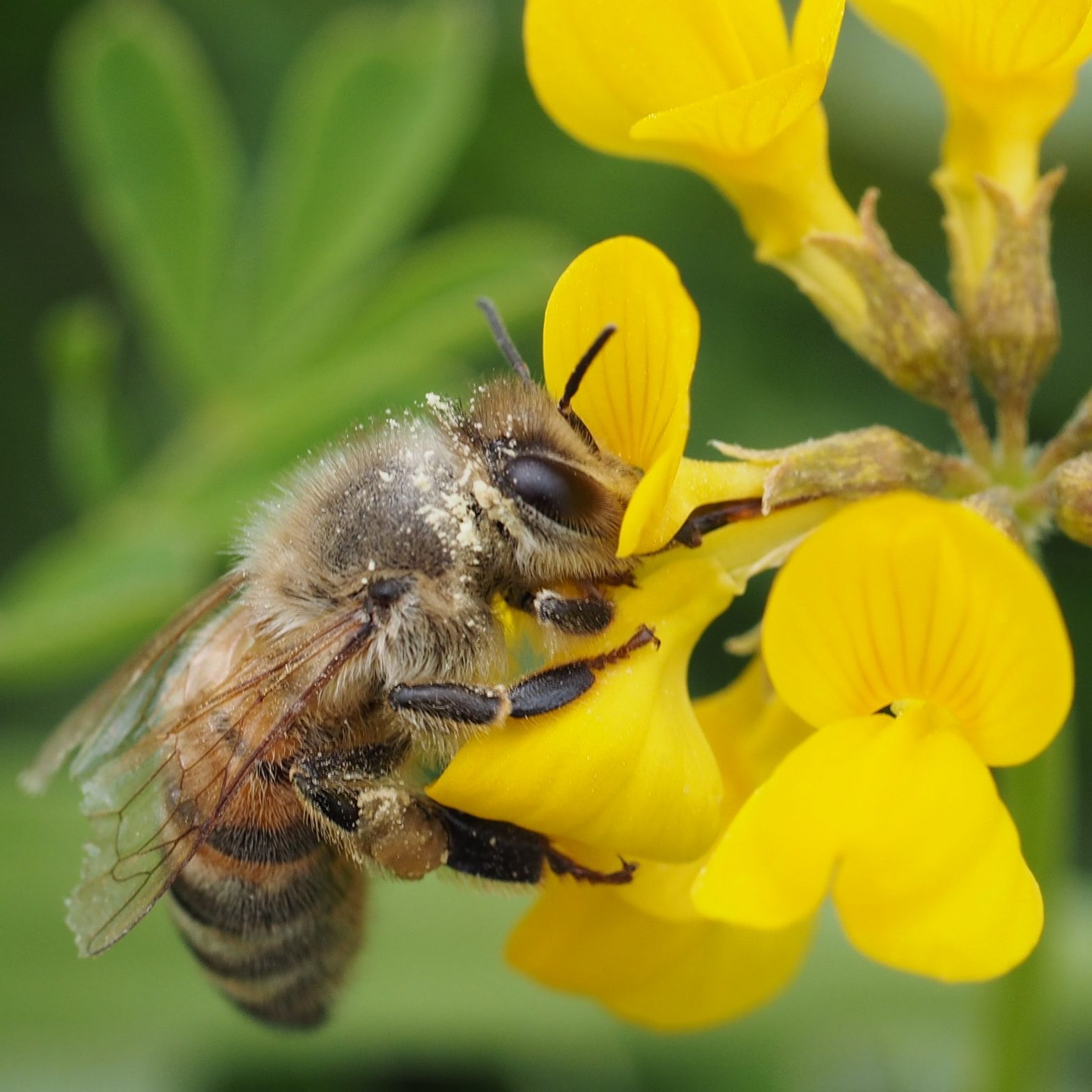
After spending half of her live indoor her second half of her live is dedicated to field work.
bee sweet

All honeycombs are filled with honey. One honeycomb is already sealed with a thin wax cover. The honey has the right water content and is ready for storage.